By Sukanto Barman (CS Intern)
Bharati Rani, 65, sits in the courtyard of her home in Mechkanta Para village, Thakurgaon district, weaving a dhokra (mat) made of jute. The dhokra is not only a piece of handcraft; it is a living testament to Koch-Rajbangshi heritage. Used for seating, drying crops, or special occasions, each dhokra carries the stories, culture, and vivid reflections of the social life of the Koch-Rajbangshi community.
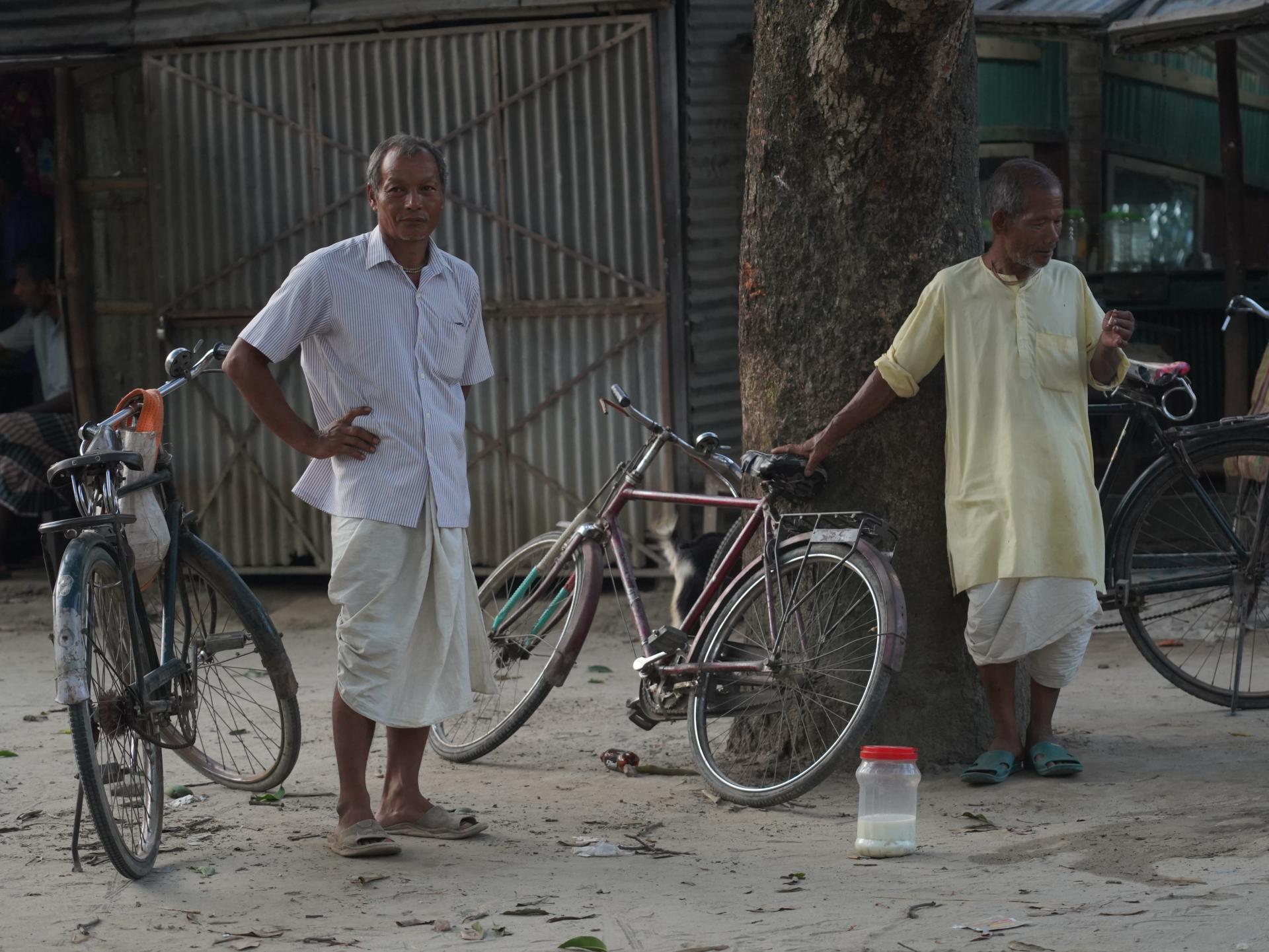
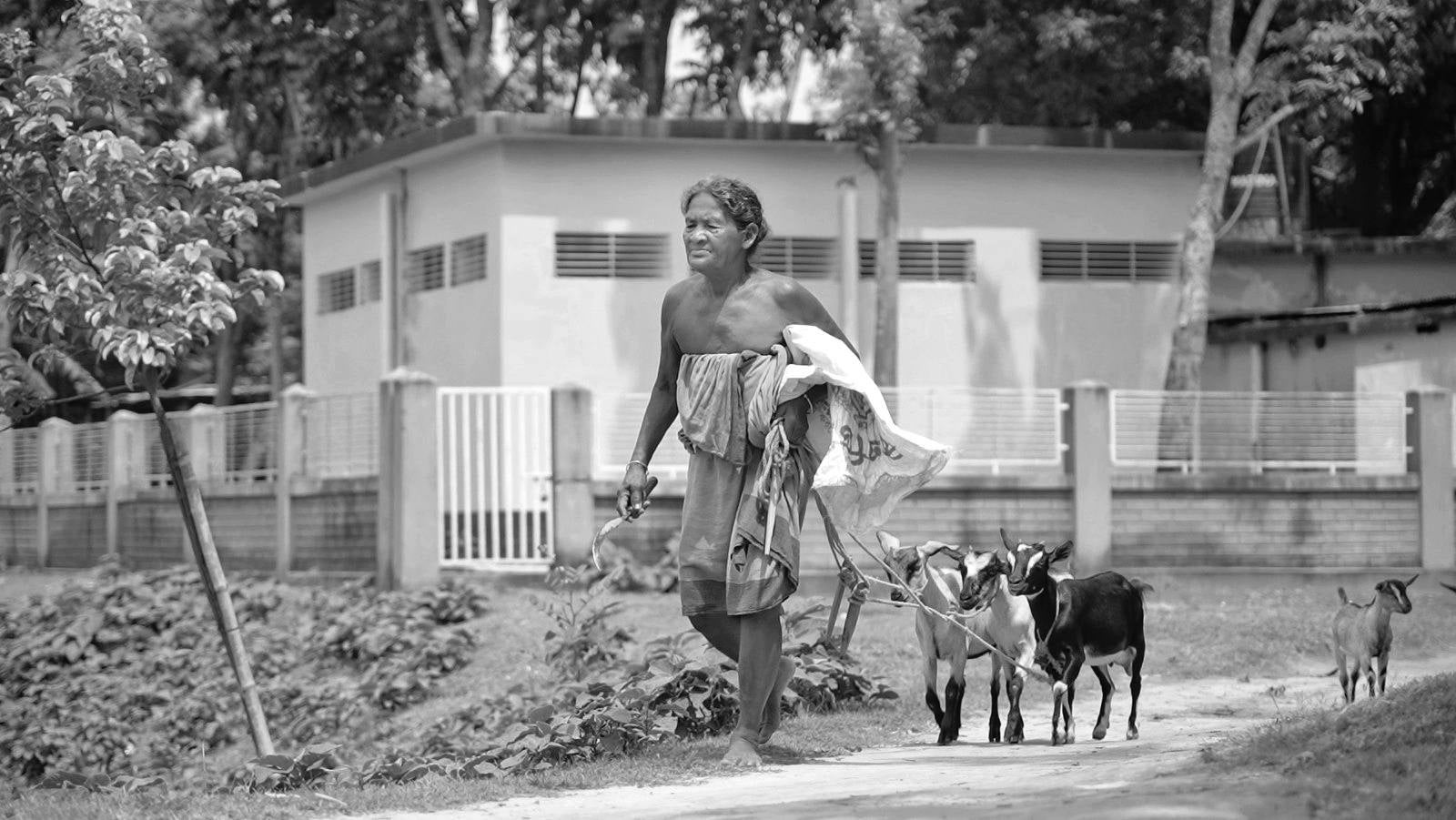
In the northern region of Bangladesh, particularly in Thakurgaon and other districts of Rangpur, one can still find elderly men walking through village roads and local markets, wearing a paeeta (sacred thread) across their bare chests and a matha (traditional, knee-length white cloth) wrapped around their waists. Elderly women can be seen herding goats in the fields, dressed in their traditional patani, a traditional handwoven dress worn by women, wrapped from chest to ankles.
Once upon a time, people of this community wore their own knitted clothing. During winter, they used handmade blankets, mattresses, and dhokra. Sukanto Barman, a Cultural Survival Bazaar intern, visited various places in Thakurgaon district to explore the handicrafts traditionally practiced by the Koch-Rajbangshi Peoples.
Keshurbari village is located about four kilometers east of Borodeshshori market in Thakurgaon district. Traditional handlooms used by Koch-Rajbangshi people have been produced here for generations. Through the art of weaving, village artisans not only meet their own needs, but also earn their livelihood by producing lungis, sarees (saris), and towels to be sold in local markets, through major traders, or by visiting nearby villages.
Sukumar Debnath, a resident of Keshurbari, has been involved in handloom weaving for almost 25 years. During our visit to his house, he continuously turned the yarn reel of his handloom, weaving a blanket. “My grandfather and father worked; I have learned from them. Now, my eldest daughter can also weave,” he says.
Debnath used to weave lungis, which are stitched, often colored, ankle-length cylindrical garments popular across South and Southeast Asia, and now favored by younger Koch-Rajbangshi people as well. He also weaves towels, but now mainly weaves blankets and maxi dresses. It is his sole source of income. With a tone of regret, he says, “In the past, many people in the village were involved in this work. Now, only a few continue it. The younger generation has turned to other jobs. Still, I have not given it up—I will keep doing it as long as I can.”
In addition to handlooms, Koch-Rajbangshi people make handicrafts from bamboo. Eight kilometers away from Keshurbari, in the village of Mondolpara, Debipur Union, Susila Rani makes bamboo tools for catching fish known as tepai, volong, or dihiri, depending on the region. “All members of my family can do this work. I have been working for five years. During the monsoon, employment reduces, so we carry our livelihood through this work,” she says.
For hunting and farming, Koch-Rajbanghsi people have close relations with iron tools. While people no longer hunt because the forests have been reduced and plainlands have increased, the iron materials used for farming, including sickles, spades, and plows, are still an essential part of life. Tirthanath Barman from Moldoladham village, Ruhea Thana, produces various items by melting unused and old iron materials and selling them. “One of my elder brothers did this work. I learned from him. Now, my son has learned this work, but he can choose any job he wants,” he says.
A Living Heritage at the Crossroads
The men, women, and families involved with historical handicrafts earn money from this work. Debnath works throughout the year weaving on handlooms. When demand increases, his family members help him. It is the sole source of income for his family of seven. He said he earns $150–200 per month, sometimes more. And he helps create jobs for the youth by making these items. “Previously, over 500 handloom artisans worked here. Now, only a few continue due to reduced demand. [Only] five very small handloom factories are running,” Debnath says.
For women, there is little way to sell their handmade bamboo crafts outside the village, as small retailers purchase them at much lower prices. The price of each tepai ranges between $1.50–$2.50 USD, depending on the monsoons. “I am getting a lower price than the market,” Rani says.
Since 2016, the Bangladesh Koch-Rajbangshi-Barman Organization has been working for the welfare of the Koch, Rajbangshi, and Barman Peoples, bringing notable socio-economic changes. According to Prosanto Barman, head of the organization, “We are seeking vendors and investment to keep these crafts alive for generations. We stay in touch with the artisans and plan to buy and sell their products through our organization. We will also send proposals to the Deputy Commissioner and nonprofit organizations for financial support.”
Barman says that more educated youth are now taking pride in their identity, studying at universities, and working to strengthen their culture and language. The organization aims to continue supporting local artisans while motivating new members to promote Indigenous crafts.
Handloom, bamboo, and iron crafts are living symbols of Koch-Rajbangshi culture. Preserving them ensures that this heritage continues for future generations. But with the passage of time, these traditions are fading away. The younger generations are losing interest in such ancestral practices, being drawn instead to city jobs, the comfort of urban life, and dreams of going abroad.
Yet, a few families still safeguard their old looms, bamboo molds, and iron furnaces. The rhythmic sound of the loom, the beat of cutting bamboo, and the smoky scent of heated iron remind us that the Koch-Rajbangshi people are not just a story of the past, but a living culture.