The hosting of the 2014 Winter Olympics in Sochi, Russia has caused a recent uproar in the local Indigenous Circassian community. The Circassian ancestral home is Circassia, Russia, an area in the North Caucus along the North East shore of the Black Sea. The 2010 Russian census recorded a population of 718,727 Circassians. Circassians are divided into two main tribes, the Adyghe and the Karbardians.

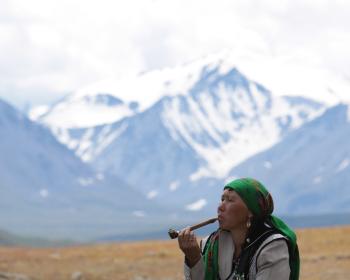
 

In a surprising move, officials from Russia’s Altai Republic have approved construction of a pipeline that would bisect the sacred Ukok Plateau, carrying natural gas from Siberia to China. The August 2nd decree gave Gazprom and its contractors permission to conduct work on the Ukok Plateau despite what Greenpeace Russia claims would be a violation of several local and federal laws.

On June 20th, the regional government of the Altai Republic in Russia reviewed and passed a decree on the “Preservation and Development of Sacred Sites of the Altai Republic.” The decree imposes restrictions on various kinds of activities at sacred sites, including any activity resulting in resulting in damage to the top soil leading to geological exposure causing irreversible changes to the hydrological regime and any activities resulting in the destruction of the natural habitats of plant and animal species, among other activities.

A Moscow News article describes the battle lines between environmentalists and Indigenous Peoples on one side and Russia’s Gazprom company on the other, leaving the future of the sacred Ukok Plateau uncertain. Environmentalists and Indigenous organizations are urging Gazprom to choose an alternate route that would spare the Ukok Plateau from desecration.

Building the pipeline across the Ukok would be “moral violence against people,” said Urmat Knyazev, a deputy in the Altai republic’s legislative assembly.

Subscribe to Russia