
By Achola Oliver (Karamojong Ethur)
I am speaking as a child of the land. I was born in the red soils of Abim District, Karamoja, Uganda. My earliest memories are of following my grandmother to the fields at sunrise, planting sorghum, millet, and beans. For us, food was never only about filling the stomach. Food was life, memory, and culture. It tied us to the land, our ancestors, and our children.
Today, hunger stalks our homes. According to the 2024 IPC Uganda Acute Food Insecurity Analysis, as much as 30% of Karamoja’s population is in crisis or worse. Families skip meals, sell assets, and depend on relief. Behind these numbers are human beings—Indigenous people like me— deciding whether to cook our seeds or save them for the next planting.
This is why we must speak not just of food security, but of food sovereignty: the right of people to control their food systems, grow what nourishes them, and live with dignity.
Food as Identity: The Indigenous Worldview
In Abim, land is a sacred gift to be cared for and passed on. Seeds are heritage, selected and saved by women for generations. Sorghum and millet are not just crops, but symbols of resilience. Wild foods like tamarind, shea nuts, and desert dates complete our diets. Food has always been tied to culture through harvest festivals, seed ceremonies, and communal meals. Women were custodians of granaries, ensuring families survived lean seasons. But this world is under threat.
Several forces have undermined Karamojong food sovereignty. Colonial capitalism replaced millet and sorghum with more lucrative cash crops and dismissed Indigenous farming methods as “backward.” Climate change has made rains erratic, with frequent droughts wiping out harvests. Land pressures and insecure tenure have weakened communal systems. Agribusiness has created dependency on chemical fertilizers and threatens our native biodiversity. Conflict and marginalization continually disrupt cycles of farming and herding.
The result is bitter: the people who once fed themselves with dignity are now dependent on aid and expensive markets to survive.
Case Study: Ayugi Conny
Ayugi Conny is a 30-year-old woman from Morulem. She has five goats and two acres, on which she planted sorghum, beans, and groundnuts, saving seeds passed down from her grandmother. In 2023, the rains failed and her crops shriveled. By July, her granary was empty. She sold firewood, carrying loads into town, and fed her siblings only thin porridge. Relief food lasted two weeks.
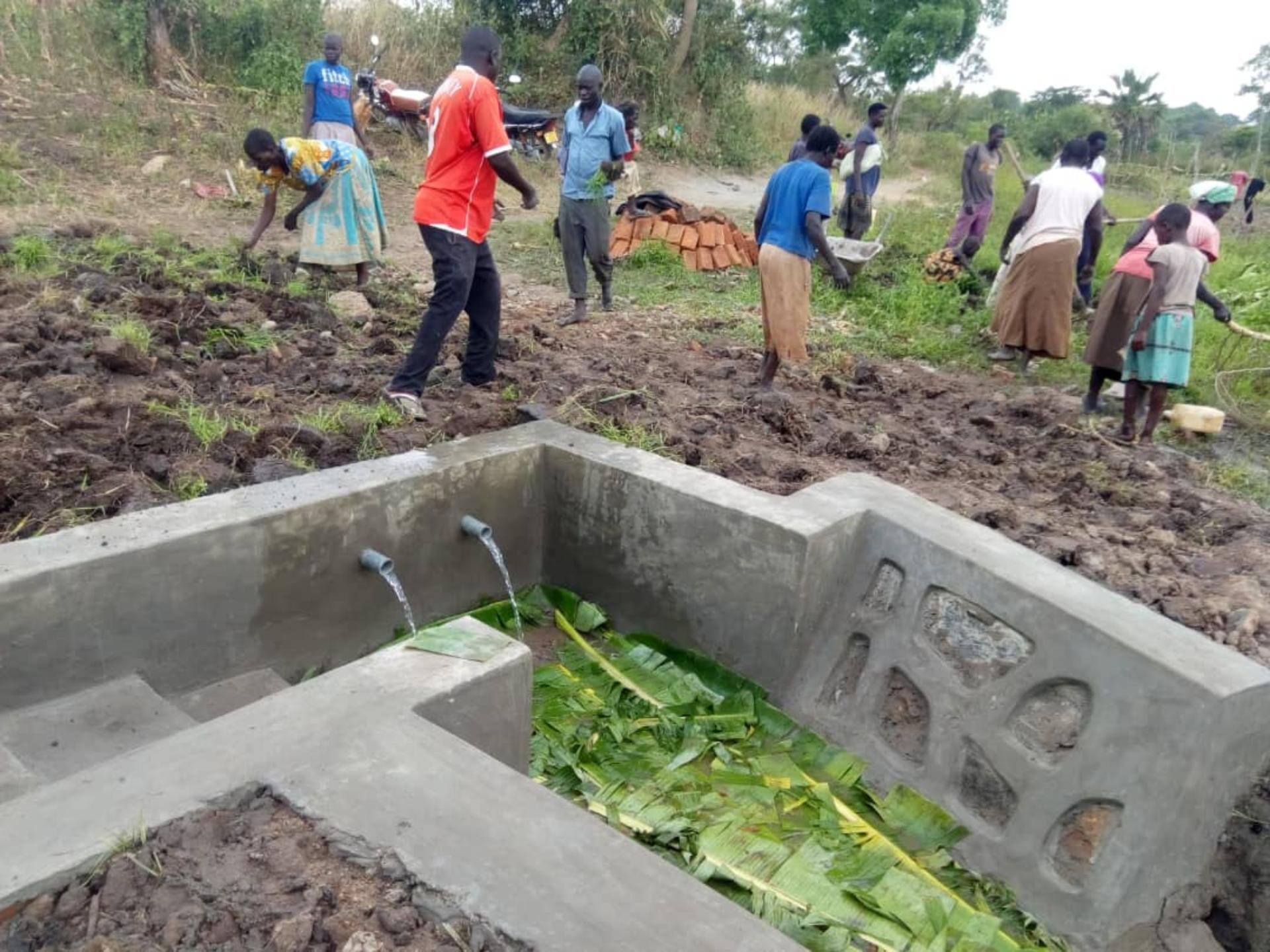
Fortunately, the next year was a little brighter. In 2024, with support from a women’s group trained by Community Development Shield Uganda, Conny learned new farming techniques, including neem leaf solution, water harvesting, and intercropping millet with cowpeas. Even in poor rains, she harvested enough millet to last two months.
She now keeps part of her harvest as seed and exchanges varieties in a seed-sharing circle. “Food sovereignty means not waiting for the truck with relief food. It means my own granary, my own millet, and my children eating food that makes them strong,” she says proudly.
Conny’s story is not unique: it is the face of resilience and hope in Karamoja.
Seed-Saving Circles: Community in Action
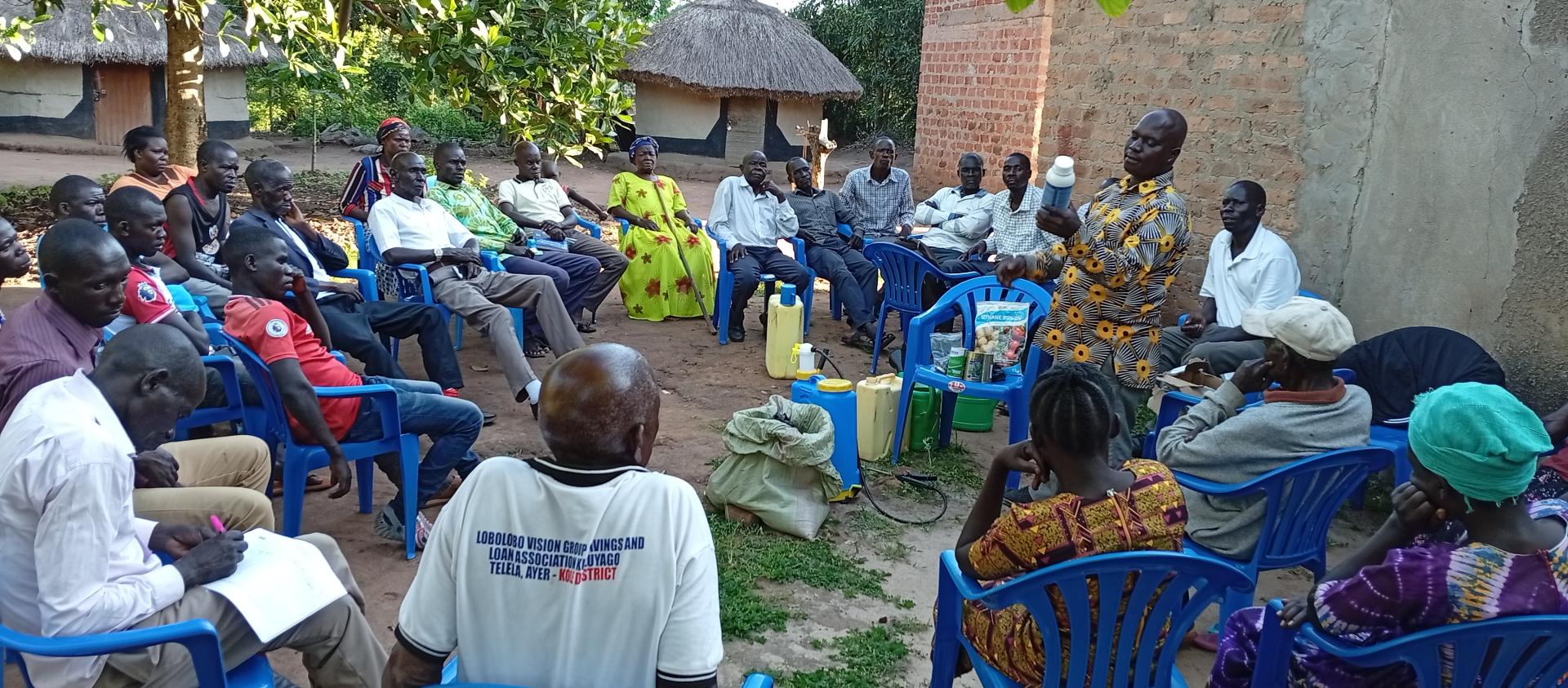
Seed-sharing circles have become a lifeline. Women gather to exchange sorghum, millet, and beans, teaching each other pest control, storage, and planting techniques. Rose Apio, a cooperative leader, explains: “When we share seeds, we share knowledge and strength. Even if one of us fails, the community ensures no child goes hungry.”
These circles are not just practical: they are cultural revival. Traditional songs accompany planting, and Elders teach children to respect the land and seeds. “It is our history in every kernel,” says Eriaku, an Elder farmer.
A new voice in these circles, 19-year-old Hannah Adong, shares, “When I plant the seeds my mother gave me, I feel connected to all the women who came before me. It gives me hope that we can feed ourselves without losing who we are.”
Elder farmer Benon Lorika adds, “When the young ones take up our seeds, they carry forward not just plants, but knowledge, prayers, and memory. That is how communities survive droughts and wars.”
Our youth are key. Many leave for towns, believing farming is backward. Yet, without them, our future is empty. Food sovereignty reframes farming as dignity and innovation. Agroecology, solar irrigation, and digital markets can make agriculture attractive.
Culture also matters. Reviving seed fairs and food festivals strengthens pride. When children eat millet porridge at school instead of imported maize flour, they taste both nourishment and identity. Simon Lokwawi, 22, affirms this perspective. “At first, I mocked the millet. But learning how to grow it and how it resists drought, I now teach others. Our youth can innovate without leaving home,” he says.
“I used to think farming was only for the old. Now I see it as a way to create wealth, protect our heritage, and fight hunger. Our youth are proud farmers, too,” Akello Sharon Lucky, 21, adds.
Partnerships, Policy, and Justice
Community Development Shield Uganda has stood with communities in Karamoja by promoting Indigenous climate-smart farming and agroecology, supporting seed-saving groups and farmer cooperatives, advocating for land and Indigenous rights, training women and youth leaders, and amplifying local voices in national and international spaces. “Our work is not to hand food to people, but to strengthen their capacity. True change happens when communities decide what to grow, how to grow it, and how to share it,” says Alanyo Agnes, a cooperative trainer.
Food sovereignty is also justice, and the right to food must be enforced in practice. Customary land systems need legal protection. Seed laws should defend farmer-managed seeds, not just corporate varieties. Fair markets must ensure farmworkers are not exploited by middlemen or cheap imports.
Until policies shift, Indigenous farmers remain vulnerable to forces beyond their control. “Policy matters, but so does our voice,” says Lydia Nakato. “We must speak, or the seeds and our children will be lost.”
Resilience and Innovation
Climate unpredictability has forced farmers to innovate. Zaï (tassa) pits, mulching, rainwater harvesting, and drought-tolerant crops are now everyday strategies. Farmer-led experiments are often more adaptive than top-down programs. “We learned to watch the clouds, to plant according to the soil, not the calendar,” Lucky says. “Nature is our teacher if we listen.”
Community Development Shield Uganda and partner NGOs facilitate workshops, linking local knowledge with scientific research. Innovations such as mobile weather alerts, community seed banks, and participatory monitoring have improved resilience. “As a farmer, it’s been an honor for me to be among the beneficiaries of your tree seedlings and training on agroforestry. I have benefited a great deal from it, and the knowledge of agroforestry will certainly improve agricultural productivity in Talabal village,” Omwony James says.
Food sovereignty is more than survival. It is resistance against dependency and exploitation. It is the right of people to healthy, culturally appropriate, sustainably produced food, and the right to define their own food. In Karamoja, this vision is already alive. Women are reviving drought-resistant sorghum and millet. Youth are experimenting with Indigenous, climate-smart practices. Elders are teaching children about wild food and Indigenous medicine. Farmer cooperatives are resisting middlemen and linking to local markets. Each act of saving a seed, planting a zaï pit, or sharing food in a festival is resistance and renewal.
I dream of a Karamoja where granaries are full year-round and Indigenous seeds thrive in our soils; where women lead cooperatives and decision-making, youth are innovators and proud farmers, food festivals celebrate our resilience, and relief trucks are no longer lifelines. This is possible if we reclaim our seeds, protect our land, and value our Indigenous knowledge.
In 2024, Community Development Shield Uganda received a Keepers of the Earth Fund (KOEF) grant to support their work. KOEF is an Indigenous-led fund within Cultural Survival designed to support the advocacy and community development projects of Indigenous Peoples. Since 2017, KOEF has supported 440 projects in 42 countries through small grants and a wrap-around approach totaling $2,667,147.
Achola Oliver holds a master’s degree in special needs education and currently works with Community Development Shield Uganda as Project Officer. Oliver hails from the Kakar Clan of Karamojong Ethur Peoples.
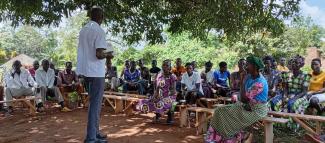
Project Officer delivering the Building Bridges curriculum to parents and caregivers.The primary goal is to empower parents to explore their children’s physical, emotional, and mental journey.